


Measles spreads in 56 districts, WHO concerned
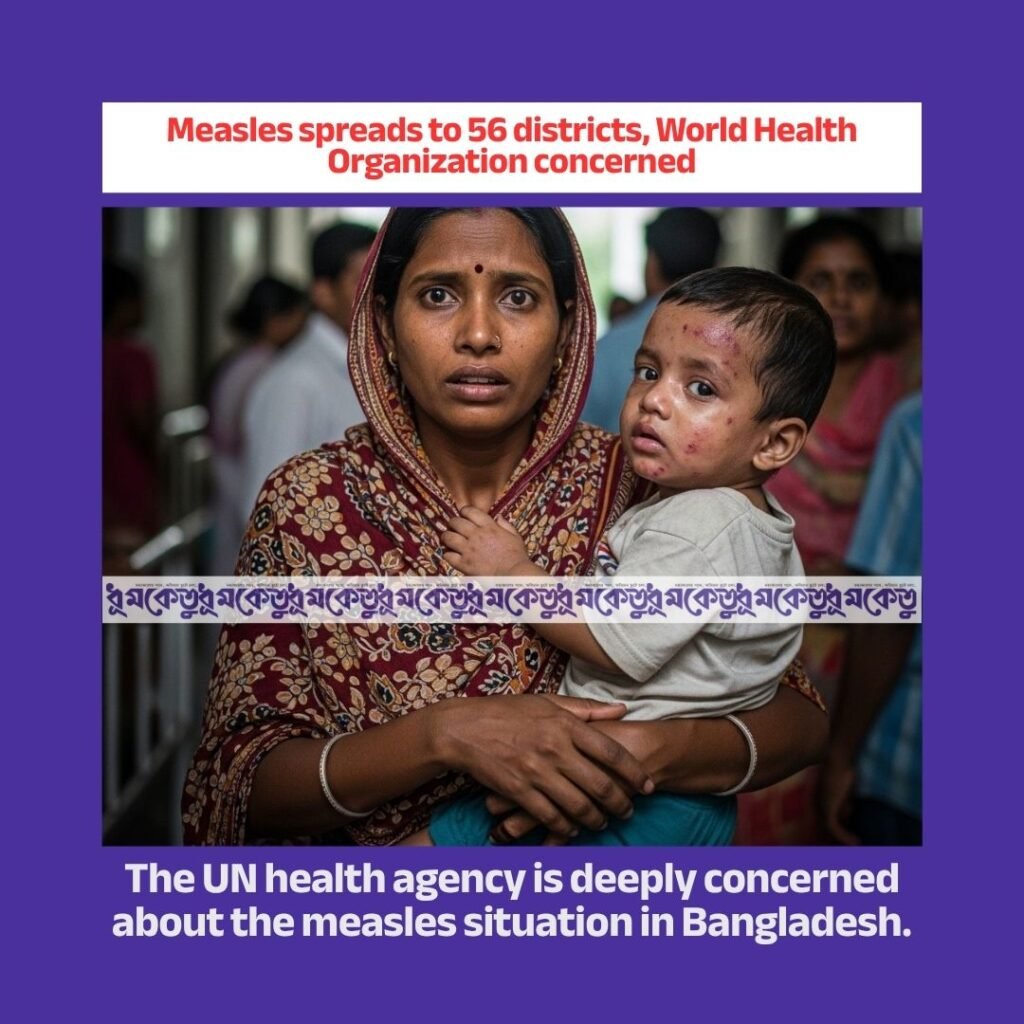
Measles spreads to 56 districts, World Health Organization concerned
The World Health Organization says that the ‘immunity gap’ or deficiency in immunity that has emerged in Bangladesh in the last two years in the routine vaccination of children is the primary reason for the current measles outbreak. Measles has spread to 56 districts of the country.
The World Health Organization said that 69 percent of children infected with measles are under 2 years of age, 34 percent are under 9 months of age. The UN health agency is deeply concerned about the measles situation in Bangladesh.
In line with the WHO South-East Asia Region target, the target has been set to end endemic (the disease is always present) measles and rubella virus transmission in Bangladesh by 2026. This means that measles and rubella virus transmission should be absent for at least 12 months. In this context, Bangladesh was doing quite well in achieving the goal of eliminating measles and rubella. The measles infection rate per million population was 1.41 in 2022, 1.60 in 2023, 1.43 in 2024, and 0.72 in 2025. Currently, it is 16.8 percent.